Start with the earliest source you can trace
When a screenshot is your only lead, look for the image or its caption in earlier posts. Open the publisher’s page and check which person is credited. Keep the page URL with the credit so another editor can find the same evidence. If you can only identify the repost account, write that down as a lead and leave the creator unknown.
Record the basis for reuse
Save a link to the actual permission statement or license and note the edits you made. For a Creative Commons work, the creator’s title and name, a source link, and the license are useful starting points. A credit records those facts. Permission comes from the license or permission statement you can trace to the rights holder. For license-specific details, see Creative Commons’ attribution practices.
Put the joke in the alt text
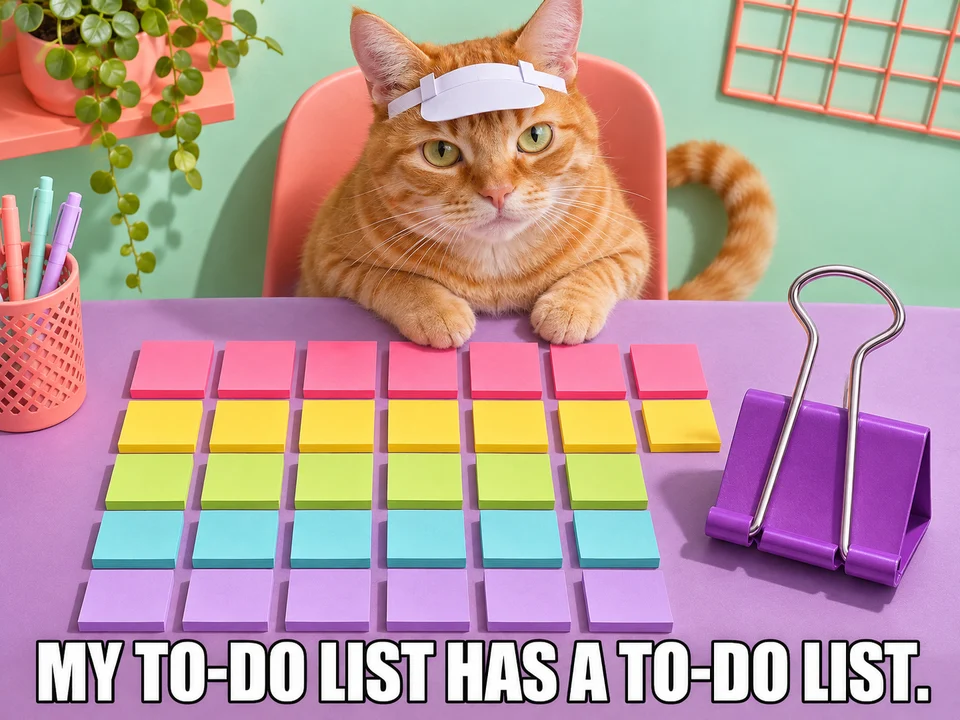
Describe the visual detail that sets up the caption. For this example, that’s a stern cat in a paper visor with an aggressively organized desk. Include the image’s meaningful text if readers can’t already find it next to the image. Skip details the joke can live without. For more cases, see the W3C alt decision tree.